Sneak Off and Read: Lines Associated with Eyes, #RSsos #RomSuspense

Can’t Keep Up? 7 Brilliant Ways To Finish Your Story
Excellent advice! Thanks, Kristen Lamb 🙂
 Image via Flickr Creative Commons courtesy of Pedro Travassos
Today we have a special treat from Dr John Yeoman, PhD Creative Writing. He’s going to give us some ways to tackle one of the biggest problems plaguing writers—the inability to finish what we start.
*gets popcorn*
Take it away, John!
***
Do you live in a world of unfinished stories? Across the year, you’ve jotted scraps here and there, stuck an opening scene beneath a flowerpot, a closing line in a shopping list and a great cameo incident… well, you’ve forgotten where it is now but it was awesome.
Join the Club of Interrupted Scribes
 Image via Drew Coffman courtesy of Flickr Creative Commons
You’re not alone.
We all know what happened when Coleridge was interrupted, when finishing Kubla Khan, by ‘a person from Porlock’. All that remains of his epic is an unfinished scrap.
More fragments, abandoned by…
View original post 1,965 more words
Sneak Off & Read: Lines Associated with Hands, #RSsos #RomSuspense
Find The Magic

Why romance writers are “frittering their talents away” writing a predictable genre

Nicely said, Helena!
 Image courtesy of Pixabay
Earlier this week an author colleague posted a link to a review of her latest novel. The reviewer was highly complimentary regarding the author’s writing skill, but he expressed deep disappointment that a writer of her ability was “frittering away her talents in a genre that didn’t deserve them” – ie romance novels. Boy meets girl, boy and girl have a conflict to resolve before the novel ends happily. According to the reviewer, it’s all “boringly predictable”. (You can read the full review here.)
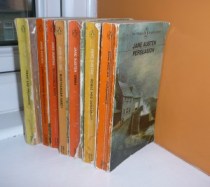 My well-loved Jane Austen collection
What is it about the romance genre that draws this type of dismissive reaction? I’ve written before about romantic conflict – that is, something in the characters of the hero and heroine that prevents them from getting together. This conflict is what romance novels are all about, and Pride and Prejudice is the perfect example. Jane Austen…
View original post 472 more words
Real Writers Don’t Self-Publish
When self-publishing gets bashed…
One of the things I love about doing what I do is that I have the ability to connect so closely with you guys and speak on the topics that matter to you. Yesterday, a fellow writer shared an article from The Guardian, For me traditional publishing means poverty. But self-publish? No way. She wanted my take on what the author had to say.
All right.
For those who’ve been following this blog for any amount of time, I hope I’ve been really clear that I support all paths of publishing (vanity press doesn’t count).
All forms of publishing hold advantages and disadvantages and, as a business, we are wise to consider what form of publishing is best for our writing, our work, our goals, our personality, etc. But my goal has always been to educate writers so they are making wise decisions based off data, not just personal…
View original post 2,294 more words
With the Sureness of an Old Lover
Sneak off & Read: Lines Associated with Easter, #RSsos #RomSuspense #Writers

LOGLINES AND TAGLINES ARE DIFFERENT And You Need Both For Your Novel by R. Ann Siracusa
“Cannot. Stress. This. Enough. Every week I see scores of pitches – sent to my inbox, my ears or via script listing sites – and every week I see Loglines and Taglines being mixed up. PLEASE STOP.”
May 11, 2010, Lucy V. Hay (script editor and novelist)
IMAGINE MY SURPRISE 
So here I was, cruising along, a relative newbie as a published author, following the lead of others who were more seasoned in the business than I will ever be. And since many of these authors seemed to use the terms logline and tagline interchangeably, I labored under the delusion that these were just different terms for essentially the same thing.
Wrong! 
Since a lot of attention focuses on these two similar but different tools of the trade, research was in order. I found plenty of blogs and articles that confuse the two, or describe the difference but use examples…
View original post 1,864 more words
 FlooF Art